
“Congratulations on your accreditation. Now, the real work begins.”
As the Indianapolis Fire Department (IFD) lumbered (and then sprinted) through its initial accreditation push, I was often told that the second cycle was the real test. Everything is fresh during the first go-around, and the opportunities for improvement are evident and plentiful. Early in the second campaign is when people realize that accreditation is a process and not a project. The “easy wins” are all gone, and the shine is off the pig, so to speak. Despite cramming several generations worth of change into five years, new efficiencies must be identified. It can be exhausting to contemplate, let alone perform.
IFD is scheduled to sit in front of the commission in March 2025. As that time approaches, I plan to provide glimpses into our reaccreditation process every few months. First, these writings will serve as a supplemental piece to our formal methodologies, providing the context behind our decisions to the next accreditation team. Second, I hope it helps someone else to think through their approaches and avoid our mistakes.
We received accredited status on March 5, 2020, just weeks before the world came to a halt. You can read about our initial process and the lessons learned here. In many ways, the pandemic provided a much-needed break for our team. We were exhausted, both physically and mentally. With the department solely focused on surviving the day-to-day logistics of quarantines and COVID response protocols, the planning division was allowed to take a break and reflect on how we could improve our processes moving forward.
Shortly after we returned from Orlando, the strikethrough version of the 10th edition was released. The timing of this was beneficial for a couple of reasons. It meant that IFD would have the full five years to address any changes from the 9th to 10th edition (as opposed to departments that must scramble to hit a moving target midway through their cycle). Also, the executive staff decided to reopen our strategic plan. The planning team seized this opportunity to ensure the 10th edition’s new core competencies would be formally addressed.
The next three years were spent actualizing our strategic plan. Our assessment strategies and executive staffing meetings continued to evolve to increase utility. The most significant change occurred late last year with overhauling our annual program appraisals and monthly planning meetings. By Q4 of 2022, we were sketching out timelines headed toward our March 2025 hearing.
Our initial schedule allowed seven months for the content completion of the community risk assessment and standards of cover (CRA/SOC), five months for the new strategic plan, and nine months for the self-assessment manual (SAM). Recognizing that we had created all of these documents over nine months in 2019, we felt that these were conservative estimates that provided enough time to produce quality work without the need for too many 80-hour work weeks.
Our two main concerns heading into the new year were “How can we better institutionalize the process?” and “Who is going to design the new SOC book?” Short of visiting every firehouse for a face-to-face meeting, we tried everything we could last time to spread the accreditation message. The results were still less than stellar.
Aside from our critical task analysis and strategic planning meetings, only a few frontline personnel were involved in our initial process. Two privates with bachelor’s degrees in journalism and English helped finish the SAM as the deadline approached, and our executive staff had varying roles in writing their programs’ documents. However, neither volunteer was in a position to help when we asked again, and the executive staff has completely turned over.
“Accreditation is not exactly institutionalized in our department and is sometimes considered a four-letter word not to be uttered publicly,” said the current accreditation manager, Chief Michael Tiernan. “We have the personnel with institutional knowledge and the experience to become reaccredited. That is not the issue. We need help with getting support from the frontline officers and firefighters who will benefit from the process.”
Another concern was the SOC creation process. The production of our original SOC was an enormous resource sink as we handled everything in-house (aside from the printing). Considering that none of us were professional copywriters, graphic designers, or editors, I am very proud of our work; however, no one was interested in going that route again.
We laid out our plans to the Chief of Fire, Ernest Malone, in late December and shared our concerns. It was at this time that we first mentioned the Center for Public Safety Excellence’s (CPSE) Technical Advisor Program (TAP) (full disclosure – I currently serve as an apprentice contractor on the TAP CRA/SOC team). We discussed that they would send 2-3 experts to teach as many of our people as we wished. They would also provide a template for writing the SOC, help with proofreading, and handle the final document design.
There was a solid case to be made for either route. We had already proven that we could do the job without outside help. As a TAP team member, there would be little factual information that I could not already provide. Also, we recently gained a team member with significant experience producing smaller public documents for the department.
But the possible benefits were substantial. Foremost among these was that bringing in outside “experts” would give legitimacy to the message. The department had already heard my spiel a dozen times. Not only would the TAP members be fresh voices, but they would also bring their spin and examples to the discussion. The TAP format would allow 15-20 firefighters to get a crash course in accreditation, immediately deepening our bench for the current process and succession planning. It is also hard to overstate the significance of not having to worry about producing the physical CRA/SOC book.
“We sat down and weighed all the pros and cons of the TAP team, but one thing outweighed all the rest,” Tiernan said. “Using the TAP had a greater potential of getting buy-in from the department, specifically the firefighters on the street. That is where we failed last time, and that is exactly what we needed. So the decision was made to move forward with the TAP.”
Full disclosure again – Our team consisted of David Farnum and Rick Fagan. My only involvement with our TAP team came from participating in the windshield tour and sitting in on about half the first two days of class. I was not compensated in any way whatsoever, formal or informal.
We received final approval to move forward with the TAP in mid-January. The timing put us in a tight spot. We had to agree to an expedited TAP process to hit our original target dates. Rather than having 8-10 weeks between the first and second team visits, we had to shorten the period to four weeks. The work an agency needs to complete during that time is substantial, so we began well before the team’s arrival in mid-February.
These efforts proved to be a blessing and a curse. On the positive side, our team was able to easily update and expand upon the information we had provided in the previous cycle. The tight turnaround time served as a motivator while working through what can be a laborious part of the process (gathering census and weather information, etc.). However, it also led to long nights and intense pressure to meet the deadline. It did not help that this push overlapped with the FEMA grant season. By the time the team arrived, we were all getting a little burned out.
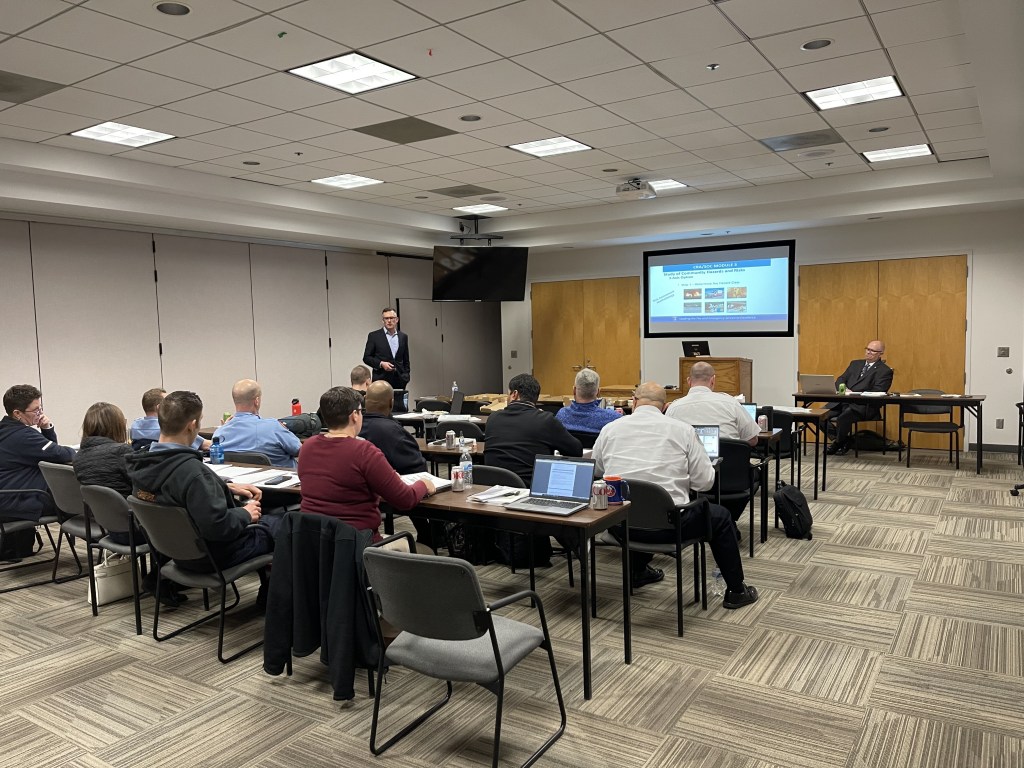
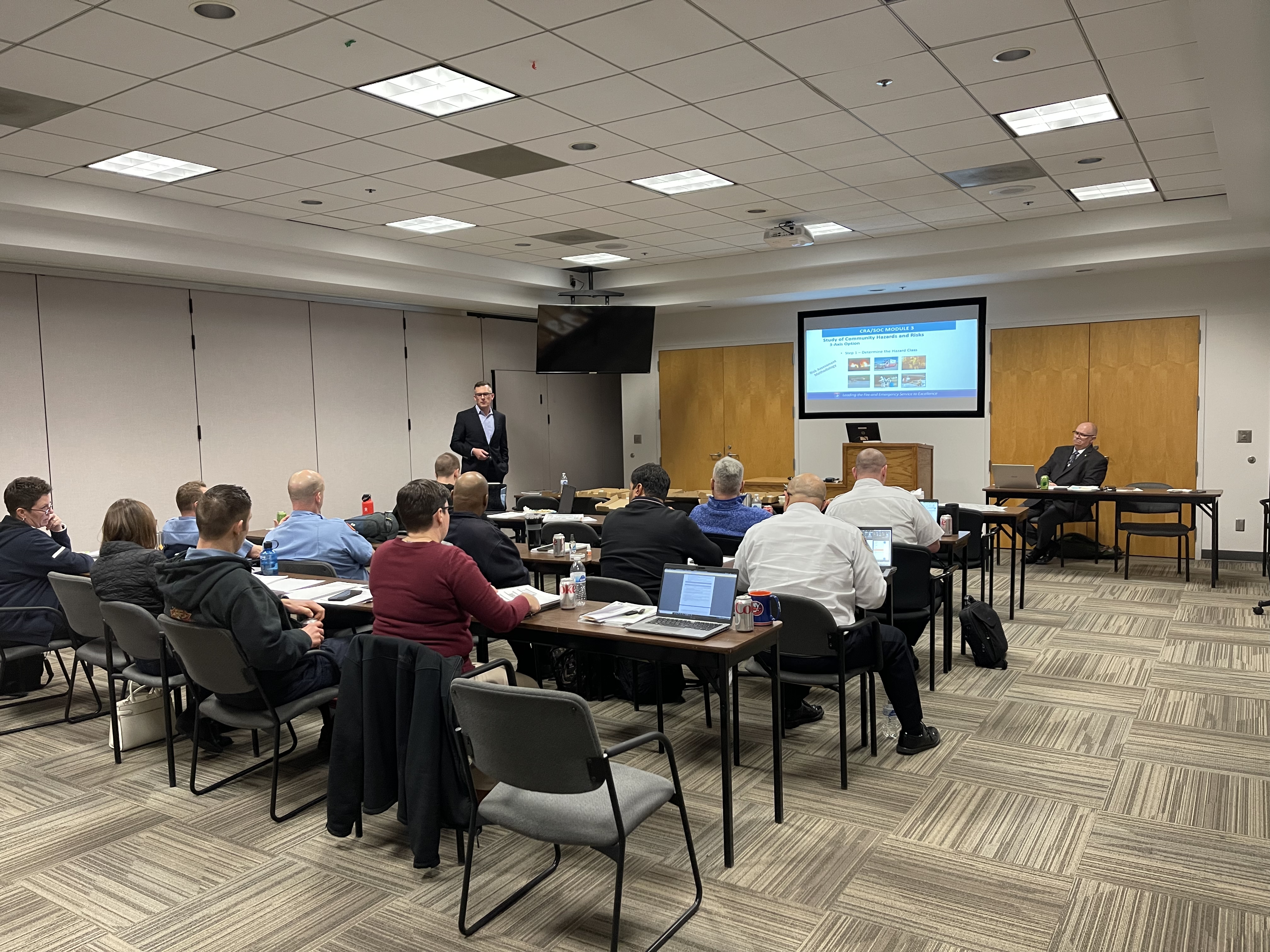
Farnum and Fagan arrived in town just before Valentine’s Day. We provided the customary tour on the first day and then prepared for class on the following two. Tiernan had arranged for 18 people to attend the workshop, detailing those on shift. We provided lunch on the last day of class but did not provide any other form of compensation. The group had a broad mix of experience and rank, including a civilian from the training division. Class started around 0900 and was over by 1630 each day.
The first set of classes was not a raging success. The material (assessing the community and the department’s current capabilities) was a bit dull for those who did not fully understand how to perform a risk-based analysis. Most of the attendees were of the mindset that this type of data collection was simply a task to be completed rather than a vital first step in a much larger plan. They did not yet see the continuous thread that runs through identifying the threats and hazards in the community, assessing the department’s resources and past performance, and determining a plan for addressing these issues moving forward (this is a topic we will more fully explore when discussing our critical task analysis meetings). In their view, the planning office had completed the work before the TAP team arrived and felt the box had been checked.
“The members of our fire department that volunteered to join the TAP sessions were confused as to why they were even there,” said Tiernan. “If the work was done, then what was the point?”
Truthfully, we had struggled to find people that were even a slight bit interested. Tiernan had contacted the three shift commanders and 30 battalion chiefs to ask for their involvement and the names of people they would suggest participating. We did not receive a single volunteer or name. We were forced to recruit from our acquaintances, which significantly limited the breadth of our pool.
“The people that joined the group were, in my opinion, only doing it because I asked them personally,” Tiernan said. “There were some exceptions, but as a whole, I don’t think they would have signed up independently.”
There was some good conversation, but few hearts and minds were won. For example, the question arose as to why we would take such a deep dive into things like demographics and construction permits when we had already done so a few years ago. The presenter explained that infrastructure, property use, and housing stock change over time. One of the attendees took exception to this, stating that the department had not changed at all in his thirty-plus years on the job. He scoffed when specific examples were presented and said, “We are going on the same types of incidents in the same areas with only minor changes.” Sensing this was not a battle that he was going to win, the presenter just moved on after agreeing to disagree.
It will be an uphill climb to sell accreditation to the “streets,” but we are committed to doing just that. We are working on a three-pronged approach involving education, branding, and hustle. Rather than focus on the facts and the “what” of accreditation, our education efforts must focus on storytelling. We need to identify specific examples of how the process has benefited the frontline firefighter and community and then learn to share these examples in compelling ways. Once hooked, we can touch on how a risk-based approach differs from tradition-based models.
Keeping in line with our education strategy, we need to rebrand accreditation by pumping out information on the many successes the model has helped bring to fruition. We can do this through emails, videos, and podcasts, with the messaging focused on the benefits to the firefighters and community.
Finally, the hustle refers to taking our show on the road. We must get into every firehouse to provide education and push the brand. We will undoubtedly take some beatings and have to answer some hard questions, but I believe in the model and feel like others will, too, once they learn of its merits. It is on us to tell the tale in a way that resonates.
I am going to stop here for now. The good news is that things went better during the second TAP team visit. Our class roster underwent changes, and people were very engaged with the new topics. In my next post, I will cover our public outreach efforts, our writing and editing processes, and everything leading up to our formal critical task analysis efforts.

 IPSC - Fire Service Musings